Clive Mason/Getty Images
Williams's 2026 season is past saving, but its Baku upgrade package is still critical. Here's why
No matter how effective its long-awaited Azerbaijan Grand Prix upgrade package is, Williams has failed in 2026.
Team principal James Vowles framed the midfield-leading fifth place it achieved last year as “our new established baseline”, so being ninth-best so far this season, ahead only of newcomer Cadillac and the struggling, but improving, Aston Martin, falls far short of those expectations.
But looking beyond this year is the bigger picture of tackling the problems hidden in 2025 by rules stability and a degree of complacency about its progress, which is what makes this first on-track step so important.
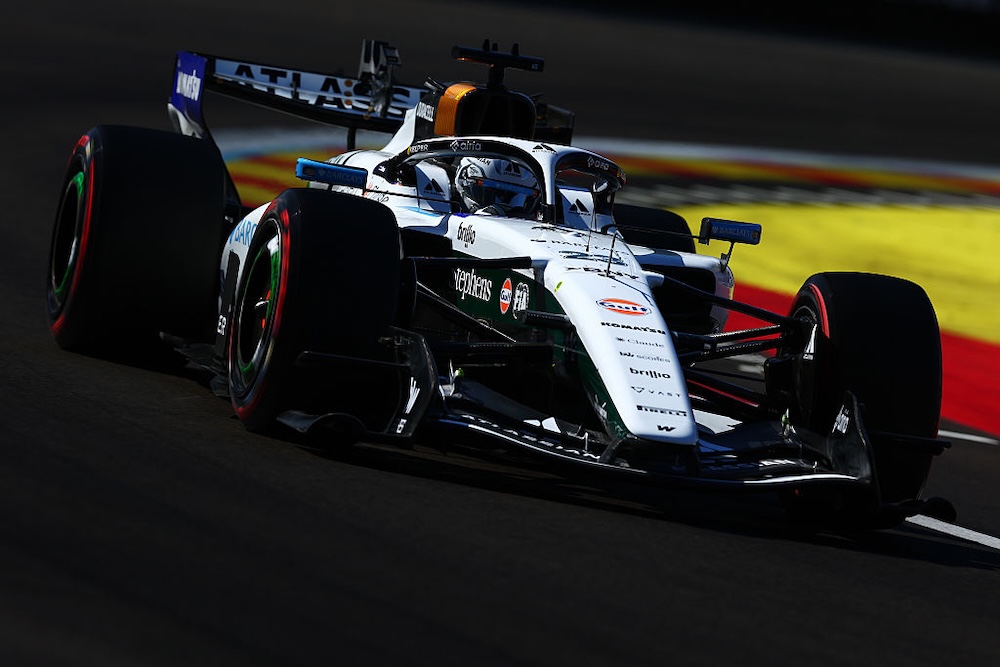
The upgrade is centered on two brand-new, lightweight chassis designed to get the car that started the season almost 30kg too heavy not only down to the weight limit, but a little below it. To add to that, there are aerodynamic improvements. This should mean a significant performance step, but Williams is so far off that at best this will only make it a more competitive lower-midfielder having usually been cast adrift off the back of that group.
“We’re finishing 50 seconds behind the midfield at the minute, so we’re losing a second a lap, more or less, in the race,” said Alex Albon when asked what he expects from the Baku changes.
“It needs to be a pretty big upgrade to do it [eliminate that gap]. All we know is it’s going to be a good step, but is it going to be the full step? I’m hopeful, but I don’t think it would be. The focus is on next year as well, and we realize we’re too far back at the moment to have a couple of upgrades for this year.”
Defeatist talk, you might think, but realistic. It reflects the fact that Williams has bigger weaknesses to fix than the problematic FW48, which is a symptom of its ills rather than the root cause. The Baku upgrade is a test of some of the changes made, but what really matters is how well Williams has reacted to wider deficiencies exposed by the complexity of the regulations overhaul in 2026. As Carlos Sainz has said, “you need a regulation change to realize how far you are from a top team”, and this is a harsh lesson Williams has learned painfully publicly.
Things started to go wrong over the winter, and perhaps the most damning aspect of this is how long it took to comprehend the scale of the problem. The car was late, meaning Williams wasn’t ready for the crucial first pre-season test in Barcelona.
“We are challenging the business,” said Vowles in early February. “Aerodynamically, the car is a lot more complex than anything we've put out before, and in terms of design, it's a lot more complex than anything we've put out before. This is more [the] benchmark for very top teams, not what we were doing two years ago. So, I'm actually incredibly happy the car is more complex, but I didn't scale the business in the right way to achieve the output, clearly.”
Although falling three weeks behind, as Williams was in testing, might sound trivial, it has a knock-on effect so profound that Vowles later characterized it as “unrecoverable”. That’s not just in terms of the loss of running, but the fact you are saddled with a car that is so overweight as a result of the necessary cutting of corners to get it ready in the first place that it’s giving away significant lap time, and the resources required to fix this being diverted from the normal development work.
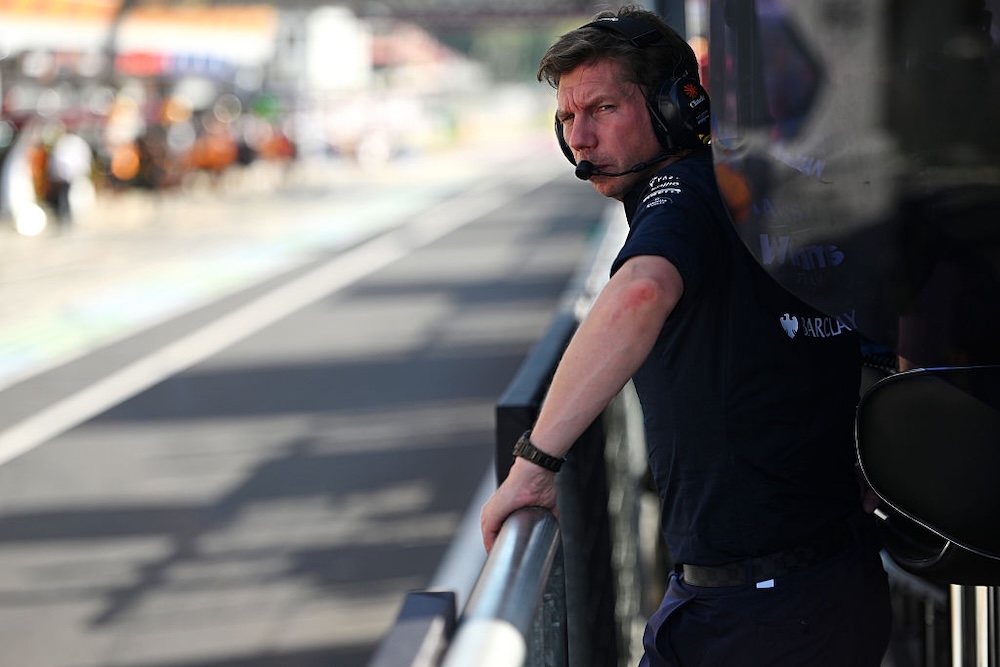
Williams team principal James Vowles has a clear view of the team's shortcomings, but the Azerbaijan updates will be the first hint as to whether they're on the right path to solving them. Rudy Carezzevoli/Getty Images
That’s led to what he’s called an “enormous” catch-up process that means only in Baku will Williams have a car that’s roughly in the ballpark of where it should have been early in the season. Effectively, the upgrade Williams introduced in Miami was where it should have been in Melbourne, putting it two months behind at this point. And remember, its rivals have also made gains since then, underlining how big the opportunity cost of having to fix this is for Williams. That’s a profoundly different scenario from what Williams faced heading into its strong 2025, when rules stability meant it was dealing with the evolution of a known product and improved processes.
There were also development errors, with the ever-improving tools at Williams’s disposal coming online later than ideal. That’s a legacy of the two decades of underinvestment that Williams is trying to recover from since being bought by New York-based investment firm Dorilton Capital in 2020, with the added challenge that the cost cap regulations limit how much money can be thrown at that catch-up process.
The car was conceived to run at too high a rear ride height, with Williams eager to cash in the downforce potential of increasing the angle of attack, but inhibited by rules outlawing the aerodynamic geometries you would ideally harness to make that possible. When you design with high rake, it’s key to ‘seal’ the underfloor at the rear to ensure you get the expected downforce and, like Aston Martin, Williams overreached on this score.
Part of this is the consequence of evolving systems and ways of working within Williams, replacing some design and development tools that had fallen behind – Vowles has cited its CAD setup as being as much as 15 years out of date – and creating a modern top-team culture.
This all takes time, and while Williams has not made as large strides as it should have done thanks to underestimating the problem, it’s important to note that when it comes to improving something on the scale of F1 teams, that progress can be glacial. Williams is battling to deal with all of this while working through the other challenges of the 2026 rules, such as optimizing the all-important harvesting and deployment of the ERS system.
So what has actually changed? Perhaps the most high-profile is the signing of Piers Thynne from McLaren as chief optimization and planning officer. It’s an off-putting title, but that belies the fact that his role is crucial in sharpening up the way the team operates in terms of speed, processes and quality. After all, he is credited as a key player in improving McLaren's production and operations side on its rise to the front of F1. What’s more, his recruitment is one of the factors that contributed to Sainz deciding to sign on the dotted line on a new contract, even though his arrival in August means Thynne could not impact the new chassis project.
Thynne is just one of a wave of recruits, but Williams’s changes are about more than people, they are also about systems. Its planning functions have been overhauled as the season has progressed in an attempt to implement fixes to the problems that have been exposed by its troubles. The result should be a team that’s sharper, more efficient, quicker and a step closer to the standards of F1’s front-runners. It’s not a one-hit fix, and this is all part of a process of evolution that will continue long beyond the end of this year, but these were fundamental weaknesses that Williams needed to tackle. The one saving grace of the situation is that had they not been exposed so brutally this year, Williams would have carried these vulnerabilities into the future.
For now, the Baku upgrade – specifically the two new chassis – is the first test of the changes. Lap time is just part of the equation; the key is that these are ready on schedule and that they will, hopefully, work as planned. The wider recovery is longer term, with Williams realistically able to aspire to leap back to the front of the midfield pack at the start of next year, even though the leading trio in that group – Racing Bulls, Alpine and Audi – are currently well ahead, and will surely still be for the rest of the season.
Next year’s car will also be a test of the control of characteristics that Williams has in the design and development process. Albon and Sainz have consistently complained about the frailties that have blighted Williams for years, notably the difficulty with combination braking and turning corner entries.
The challenge for Williams has long since moved on from salvaging 2026. The Azerbaijan Grand Prix weekend is the first public manifestation of the changes made as a result of what’s been a disastrous season on track. Whether this step works as hoped proves whether it’s able to turn what is, overall, a negative into a positive when it comes to the long-term recovery of a legendary team that has now been striving for almost three decades to get back to winning world championships.
Edd Straw
Edd Straw is a Formula 1 journalist and broadcaster, and regular contributor to RACER magazine. He started his career in motorsport journalism at Autosport in 2002, reporting on a wide range of international motorsport before covering grand prix racing from 2008, as well as putting in stints as editor and editor-in-chief before moving on at the end of 2019. A familiar face both in the F1 paddock, and watching the cars trackside, his analytical approach has become his trademark, having had the privilege of watching all of the great grand prix drivers and teams of the 21st century in action - as well has having a keen interest in the history of motorsport. He was also once a keen amateur racing driver whose achievements are better measured in enjoyment than silverware.
Read Edd Straw's articles
Latest News
Comments
Comments are disabled until you accept Social Networking Cookies. Update cookie preferences
If the dialog doesn't appear, ad-blockers are often the cause; try disabling yours or see our Social Features Support.